Are you still struggling to decide which radiator hoses to use for your new vehicle model? Are you considering upgrading your old hoses to silicone radiator hoses but are unsure if they’re suitable? This article will help you to know more about silicone radiator hoses and compare them to traditional rubber radiator hoses, then make a wiser decision.
Are Silicone Radiator Hoses Better?

Silicone radiator hoses can withstand higher temperatures, are more durable, and offer more aesthetic options, so they are undoubtedly helpful in improving vehicle performance and reducing the frequency of machine maintenance. For racing cars, vehicles focused on beauty, or those driving in extreme environments, silicone radiator hoses are indeed a better choice.
On the other hand, installing silicone radiator hoses requires a higher budget, and due to their higher permeability, more frequent vehicle inspections are necessary. Therefore, whether they are a better choice depends on your specific needs.
Eight Benefits of Silicone Radiator Hoses

Wide Temperature Range Adaptability
Silicone itself is a high-temperature-resistant material and can withstand more extreme temperatures. Silicone radiator hoses can operate normally at temperatures from -60°C to 230°C, and can even briefly tolerate even higher temperatures.
This is undoubtedly important for cooling systems, meaning that cars or machinery can operate stably for longer periods at higher or lower temperatures without rapid aging and damage.
Machines and cars operating in hot or cold weather, or in high-temperature environments, are more prone to malfunctions, leading to unpleasant driving experiences, causing both time and financial losses. Using reliable silicone radiator hoses can reduce this risk.
Chemical Compatibility
Silicone radiator hoses are resistant to corrosion from a variety of chemicals. They don’t react easily with other substances, which gives them a longer service life.
Flexibility
Silicone radiator hoses are very flexible yet strong, and will not easily crack or leak. Silicone material can even be stretched to seven times its original length. This flexibility is maintained even during high-power work of the cooling system or in high and low-temperature environments, making the cooling of machinery and vehicles more stable and efficient.
Durability
Silicone radiator hoses have a lifespan of 5 to 8 years, and high-quality silicone radiator hoses with added polyester and aramid fibers can last even longer.
A major advantage over traditional radiator hoses is their superior weather resistance. Silicone radiator hoses are highly resistant to UV radiation and ozone, and are less prone to aging or yellowing due to external environmental factors. This characteristic reduces the probability of damage and the frequency of parts replacement in vehicles or machinery equipped with silicone radiator hoses.
Therefore, you can confidently choose these more durable parts for high-end vehicles and machinery to earn a better reputation.
Electrical Insulation
Silicone is also an electrically insulating material. Its property of not easily allowing electric current to pass through further reduces the risk of interference to the internal sensors. In the event of a short circuit in the internal wiring, the electrical insulation also prevents damage to the vehicle and avoids fires caused by electrical sparks.
Style Options and Customization
Silicone radiator hoses come in many colors and can be customized for a more personalized look. You can customize silicone radiator hoses with your brand’s logo or to match the color of other parts, making your product look more professional.
If your customers want to customize their engine bay with a distinctive look, then cool silicone radiator hoses will definitely enhance the appeal of your modification choice.
Ease of Cleaning
Silicone is a hydrophobic and oleophobic material, meaning liquids and other chemicals don’t easily adhere to its surface. This makes cleaning external dust and stains during maintenance much simpler for silicone radiator hoses.
Ease of Installation and Removal
The flexibility of silicone radiator hoses makes them easier to install and remove. In confined spaces, they can be easily bent or adjusted to the required angles and shapes, which also allows for more modification choices for the vehicle.
If you are an experienced automotive engineer or mechanic, you have surely seen rubber radiator hoses sticking to other parts after long-term use. Using silicone radiator hoses significantly reduces the likelihood of this happening, making disassembly and repair much simpler.
What Are the Disadvantages of Silicone Hoses?

High Cost
Silicone radiator hoses are relatively expensive and not suitable for budget-conscious customers. They are more of an upgrade choice for vehicles or machinery rather than a cost-effective choice.
Besides the higher price of the silicone radiator hoses themselves, the compatible hose clamps are another additional cost to consider, especially for customers who are having their own cars upgraded.
But if the vehicle or machine needs to work under more extreme temperatures or requires greater durability and stable performance, silicone radiator hoses are well worth the investment.
Permeability
Silicone radiator hoses have higher permeability than rubber radiator hoses, meaning that when coolant flows through them, trace amounts will pass through the silicone structure and dissipate into the surrounding environment. This doesn’t mean it will leak, but rather that coolant molecules have a probability of passing through the silicone molecules, so this seepage only becomes apparent during long-term use.
This will undoubtedly lead to more frequent coolant top-ups and require more frequent maintenance. If your customers prioritize convenience, then using silicone radiator hoses might make them unhappy. Because of this characteristic, silicone radiator hoses are more recommended for high-end cars and racing cars that need frequent maintenance.
Inconsistent Quality
The quality of silicone radiator hoses varies greatly among different brands, leading to mixed reviews. Some silicone radiator hoses, which are mixed with other materials or contain a large amount of fillers to reduce production costs, perform far below buyers’ expectations and fail to deliver the performance improvements they should offer. This makes choosing the right hose more difficult.
Silicone Radiator Hoses vs. Rubber Radiator Hoses
Characteristic | Silicone Radiator Hose | Rubber Radiator Hose |
Temperature Tolerance Range | -60°C to 230°C | -40°C to 125°C(taking common EPDM as an example) |
Flexibility | flexibility(those made with polyester fibers will be harder) | harder |
Tear Resistance | weaker | powerful |
Weather Resistance | excellent | weaker |
Electrical Insulation | excellent | weaker |
| Lifespan | 5-8 years, high-quality products can last for more than 10 years | 3-4 years |
Ease of Cleaning | easy | more difficult |
Required Maintenance Frequency | more frequently | less |
Cost | expensive | cheap |
| Model Compatibility | will take some time to find or customize | easy to find |
| Aesthetics | more colors available, customizable | few colors |
Silicone Radiator Hoses
Silicone radiator hoses are parts that generally outperform rubber radiator hoses in most aspects. In terms of high-temperature resistance, flexibility, weather resistance, electrical insulation, durability, ease of cleaning, and aesthetics, they do better. This allows your machine or vehicle to withstand more outdoor and long-term challenges, making it more stable and durable.
But silicone radiator hoses come with a higher cost and require frequent checks to ensure enough coolant levels.
Choosing the right type of silicone radiator hose can also be a challenge. Unlike widely used rubber radiator hoses, which can be easily found at almost any hose supplier, finding the correct silicone radiator hose may take some time. If your vehicle model is unusual, you might need to have one custom-made.
Overall, they are an upgraded version of radiator hoses for high-end applications, offering superior performance but requiring more frequent maintenance. They are not cheap or “for the lazy” for typical applications.
Rubber Radiator Hoses
Rubber radiator hoses are a cost-effective choice for most machines and vehicles. They are enough in most cases and require fewer coolant checks. If you need to replace the hose, simply choose a hose from the same manufacturer as the original hose and find the same model of rubber radiator hose. Using the same rubber radiator hose saves you a lot of time in the selection process and eliminates worries about whether it can be installed smoothly and be compatible with other components.
Whether it’s EPDM, SBR, or other types of rubber radiator hoses, they all suffer from the drawback of aging and hardening quickly in high-temperature environments. Increased susceptibility to ozone and UV radiation makes this process quicker, so machines and vehicles are unable to withstand too many challenges.
For machines and vehicles operating in high temperatures, or for high-performance vehicles, using rubber radiator hoses not only means more hose replacements but also results in time and financial losses, and even the possibility of being unable to continue competing.
The monotonous black appearance of rubber radiator hoses is rather uninteresting, and for car owners who want their cars to look cooler, it may not be visually appealing.
When Using Silicone Radiator Hoses Is Better
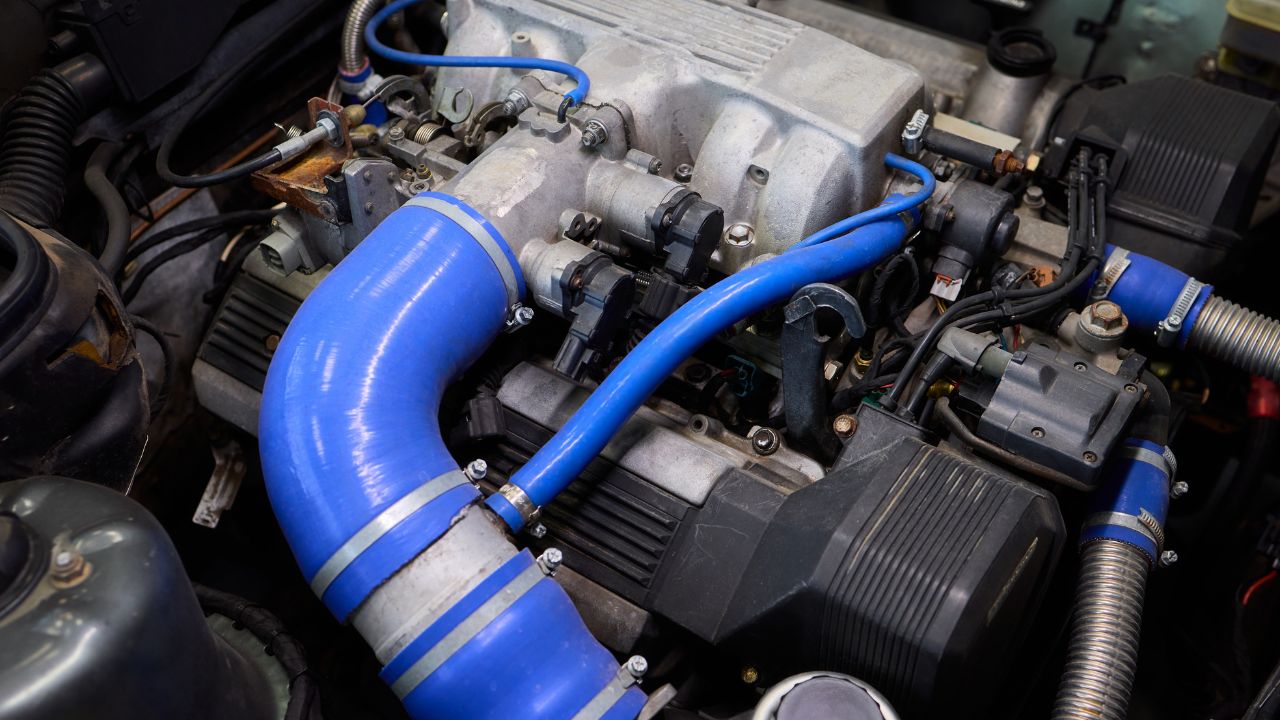
High-end Automotive Products and Performance Upgrades
For high-end vehicles and customers wanting to upgrade their vehicles, high-performance silicone radiator hoses are a better choice. They have excellent heat resistance and stability, which can help vehicles run more stably and stay away from the hassle of frequent maintenance. Compared with vehicles using ordinary rubber cooling hoses, they are less prone to electrolytic corrosion or fires, thus safeguarding driving safety.
The vibrant colors of silicone radiator hoses also give vehicles a unique look, satisfying the psychological needs of customers who purchase high-end vehicles and those seeking to upgrade their vehicles.
Racing and High-performance Vehicles
Engines in racing cars and other high-performance vehicles often work at high power, producing significant heat within the engine compartment. While rubber radiator hoses are difficult to withstand these high temperatures, silicone radiator hoses maintain a steady flow of coolant under these conditions, allowing for constant cooling of the vehicle.
Silicone radiator hoses that use fibers for added strength are more resistant to vibrations at high speeds and less prone to bursting. They are also lighter, contributing to reduced overall weight and improved speed. Silicone radiator hoses are simply tailor-made for these high-performance vehicles.
Appearance Customization

The availability of silicone radiator hoses in a wide range of colors, shapes, and customizable sizes is undoubtedly good news for those who specialize in modifying cars to make them look cooler.
Blue, red, yellow, and other colors make the car interior more eye-catching and can make your customers feel more satisfied. More flexible length and shape choices also allow your modifications to be free from the traditional structural constraints of the vehicle to create a unique style.
Machinery and Vehicles for Use in Extreme Environments
In terms of stability under extreme conditions, silicone radiator hoses are superior. If the vehicles and machinery operate in environments that are consistently hot or cold, silicone radiator hoses are more cost-effective than rubber radiator hoses, which are susceptible to temperature changes, due to their lower replacement frequency and ability to ensure continuous operation.
When Using Rubber Radiator Hoses Is Better
Although silicone radiator hoses offer better performance, they are not suitable for all vehicles and machines.
If you focus on cost-effectiveness and have no special requirements for vehicle and machine appearance, rubber radiator hoses are a suitable option. While not ideal, they are sufficient—I think that’s the best way to describe them.
While you’ll have to tolerate their uniform, uninteresting black appearance, higher failure rate, and more frequent replacements, they do save you the trouble of considering compatibility and checking coolant levels.
FAQ
Are Silicone Hoses Compatible with Coolant?
Yes. Silicone radiator hoses have excellent chemical compatibility. You can use various common coolants in cooling systems with silicone radiator hoses, such as ethylene glycol (EG), propylene glycol (PG), and organic acid technology (OAT) coolants.
Please don’t mix different types of coolants to prevent them from reacting with each other.
Do Silicone Radiator Hoses Collapse Under Vacuum?
Silicone hoses used in industrial applications can collapse under short-term vacuum conditions, while automotive-specific silicone radiator hoses, which contain a reinforcing layer, are more resistant to this. The fibers in the reinforcing layer provide support for the silicone hose, ensuring that its shape doesn’t change a lot even under blocked or extreme vacuum conditions.
If you want to ensure safety for your vehicle, you should choose high-quality silicone radiator hoses with a reinforcing layer.
Do Silicone Radiator Hoses Fit All Cars?
This depends on the type of your car. Before making a purchase, you can consult the silicone radiator hose provider for more detailed information. If existing silicone radiator hoses do not fit your cooling system properly, custom options are also available.
How to Install or Replace Radiator Hoses?
- Step 1: After ensuring the vehicle has cooled down, inspect the cooling system and determine its layout.
- Step 2: Prepare a container, unscrew the drain plug located at the bottom of the radiator, and completely drain the coolant.
- Step 3: Loosen the hose clamp and remove it, then install it onto the new radiator hose.
- Step 4: Check and clean the connectors, radiator pipe openings, and engine block components.
- Step 5: Fill the radiator with a mixture of coolant and water, open the cap, and start the car with the heater set to the highest temperature.
- Step 6: Repeatedly press the accelerator pedal a quarter of the way down for 10 seconds several times, then drain the system again.
- Step 7: Install the new radiator hoses, fill with coolant, and bleed the air from the system.
Can I Mix and Match Different Types of Radiator Hoses within the Same Cooling System?
They can be mixed, but it’s best not to do so. Using the same type of radiator hose throughout the entire cooling system will get better results.
Final Thoughts
Regardless of which type of radiator hoses you ultimately choose, their quality influences the stable operation of your machinery and vehicles, as well as whether they can achieve the performance and results you designed.
As a silicone product manufacturer with over 20 years of experience, Legensilico can provide you with more detailed information about silicone radiator hoses and support OEM/ODM services. Take action now for your high-quality silicone radiator hoses!