Silicone Screen Printing
Coordinate silicone ink, surface condition, screen preparation and cure settings to produce readable, consistent graphics on flexible silicone parts.
Existing product range
Printed silicone products—not generic garments
These existing products show visible legends or logos applied to real silicone parts. Ink, pretreatment and artwork are validated before production.

Silicone Button
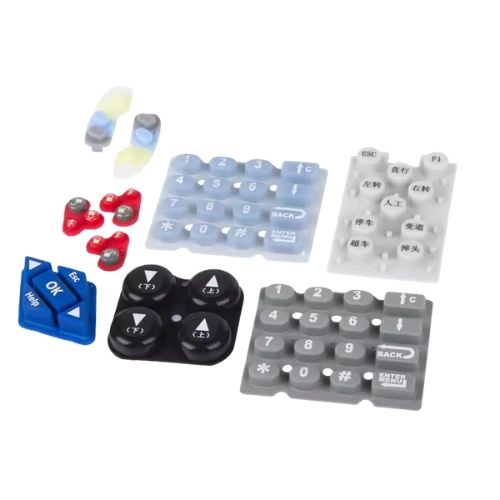
Silicone Keycap

Silicone Makeup Puff

Silicone Pencil Case
Artwork and production inputs
Printing quality begins before ink reaches the part
Silicone ink system
Select the ink and cure chemistry for the silicone substrate and use environment.
Screen and artwork
Set mesh, stencil and image detail according to line width and deposit needs.
Surface condition
Confirm the molded surface is clean and prepared for dependable adhesion.
Color and registration
Plan each layer, sequence and alignment tolerance before multi-color production.
Cure method
Match heat, UV or other approved curing conditions to the selected ink system.
Inspection standard
Define adhesion, appearance and durability checks for the final application.

Material selection
Ink type and substrate must be evaluated together
One-component, two-component, UV-cured and heat-cured systems have different handling and curing needs. Select them against the real silicone grade and production environment.
Printing route
From prepared screen to verified print
Prepare the environment
Control cleanliness and organize approved materials.
Prepare the screen
Build the stencil and confirm mesh condition and registration.
Mix and condition ink
Follow the selected ink system and working-time requirements.
Print and register
Control deposit, pressure and alignment for every layer.
Cure and inspect
Complete the specified cure, then check appearance and adhesion.
Quality controls
Manage adhesion, coverage and cure—not appearance alone
A visually acceptable print may still fail if the substrate was contaminated or the ink was not fully cured.
- Confirm surface preparation before every production run.
- Track ink condition and usable working time.
- Verify layer registration before full batch production.
- Use defined adhesion and durability checks after cure.

Where it fits
Choose screen printing when graphics must follow a flexible silicone part
Controls and keypads
Legends and symbols that remain clear on flexible interfaces.
Wearable and consumer parts
Branding or functional marks integrated with soft-touch products.
Industrial identification
Durable marks used for operation, orientation or traceable part information.
Original technical resource retained
Silicone screen printing materials, equipment and process guide
The complete original technical content remains available as a detailed reference, while the sections above help buyers assess fit and key decisions first.
Open the complete silicone screen printing technical guide
Silicone Screen Printing
Silicone screen printing is a high-quality, durable, beautiful and eco-friendly printing method. It is used a lot in the car, electronics, medical, textile and food packaging industries. If you want to learn more about silicone screen printing or want to get custom silicone printing products for your business or industry, read on.
What is silicone screen printing?
Silicone screen printing is a way of printing liquid or solid silicone coatings onto different surfaces using a screen printing technique. This method uses a screen to apply the silicone coating to a product’s surface. It is often used to print logos, patterns, and functional coatings. This technology is used a lot in the car, electronics, medical, textile and food packaging industries. You can use this material in all sorts of places. For example, on car stickers, car decorations, mobile phones, keyboards, headphones and other electronic products, medical devices, food packaging, clothes, shoes and other products with logos or patterns. This printing process makes the product look better, makes it more durable, and it is scratch-resistant. What’s more, silicone screen printing produces products that are safe and meet the standards for food and the environment.
Materials for Silicone Screen Printing
Silicone Ink:
Silicone ink is the main material used for silicone screen printing. It sticks well to most surfaces, can resist heat and UV, and is very flexible. There are different types of silicone inks. These include one-component silicone inks, two-component silicone inks, UV-curable silicone inks and heat-curable silicone inks.
One-Component Silicone Ink:
One-component silicone inks don’t need to be mixed with other components (such as hardeners or catalysts) and are ready to use straight out of the box. This ink is perfect for use on cars and electronic products because it can resist heat, sticks to lots of different surfaces, doesn’t peel easily and stays stable when it gets really hot or cold. It is usually safe and does not harm the environment because it produces less pollution during production and use. One-component silicone inks are great for products that need a long-lasting, shiny finish, like silicone bracelets, electronic component pads, medical devices, car parts and household products.
Two-Component Silicone Ink:
Two-component silicone inks are different from one-component inks. With two-component silicone inks, you need to mix the main ink with the hardener in the right proportion. The great thing about these inks is that they can resist heat and can handle temperatures of up to 200°C. The two-component ink is very strong and durable. It sticks very well to most surfaces, is resistant to chemicals and will not fade in sunlight. When using it, make sure you use the right amount of hardener to ink (usually 10:1). If the ratio is not correct, the ink may not fully dry, which can make the print quality worse. It is important to know that the curing time can be adjusted for different mixing ratios, so it can be fine-tuned as needed. Two-component inks are also very resistant to UV and ageing, making them perfect for products that need to be used outdoors or in harsh environments for a long time, like car interiors and outdoor signs.
UV-Cured Silicone Ink:
UV curable silicone inks are very popular in the modern printing industry. UV-curable inks are different from traditional heat-curable inks. They don’t need high temperatures to dry. Instead, they are cured by a UV light source and dry quickly. Even so, it can still take a lot of heat, stick to other surfaces and last a long time. It’s perfect for use in extreme conditions for a long time. UV-curable inks stay bright and stable and are also resistant to abrasion, ageing and UV. They are used in medical devices, food packaging and other fields that require high safety and chemical resistance. These inks are perfect for printing small details, especially on electronic products, logos and decorative items that need to be very precise.
Heat-Cured Silicone Inks:
Heat-curable silicone inks are different from UV-curable inks. They need to be heated to make them hard and last longer. Heat-cured inks can resist high temperatures and chemicals, so the printed patterns will not easily come off. The cured ink can be a little bit flexible, which is perfect for silicone products that need to be slightly flexible or curved. Heat curable silicone inks are used in lots of different products, like silicone bracelets, phone cases and everyday household items. They provide excellent printing results. Also, many heat-curable silicone inks are eco-friendly, which makes them a safe and eco-friendly choice.
Silicone Spray
Spraying the silicone surface with silicone spray helps the ink stick to it more easily. It also makes the printing process smoother, stops ink building up on the surface, and makes sure the inking is more even on the silicone surface, which improves the quality of the printing.
Screen Mesh
Silk screen printing is very important for silicone screen printing. If you choose the right screen, you can control how much ink is used. This will affect how detailed and high-quality the printed pattern is. The mesh count and tension of the screen will affect how accurate and quality your print is. The number of common screen mesh counts is between 40 and 600 T. The higher the mesh count, the finer the printed pattern. Higher mesh count screens are perfect for printing small fonts or complex patterns.
Thinners & Additives
Thinners and additives are chemicals that adjust and improve how quickly silicone inks flow, how quickly they dry, and other properties. Additives like thinners, hardeners and stabilisers can be used to change the properties of the ink.
Cleaning Agents
Cleaners are very important in silicone screen printing. They are mainly used to clean equipment and tools. Professional cleaners can remove ink, other substances and residue to make sure the equipment works normally and that the ink doesn’t dry up and block the machine, which can affect the printing quality. Common cleaners include screen and tool cleaners.
Curing Agents
Curing agents are an important part of silicone screen printing, helping the ink to dry and stick better. Curing agents are usually used in two-component inks. Choosing the right curing agent can make the ink more resistant to rubbing, high temperatures and UV rays. The most common types of curing are heat curing and UV curing. Heat curing needs heat to set the product, while UV curing uses ultraviolet light.
Silicone Substrate
Silicone substrate is the basis of silicone screen printing, which is widely used in industrial and consumer products due to its highly flexible and non-ageing properties. Silicone materials are mainly divided into two types: silicone sheets and silicone products. Silicone sheets are used to make seals, gaskets, feet and other soft parts, while silicone products include bracelets, medical device housings and more.
Other ancillary materials
Release Agent
The release agent stops the product from sticking to the mold during the silicone molding process. It reduces wear and tear and makes sure that the product comes out of the mould easily.
Color Additives
In silicone printing, pigment additives are used to mix different colours and make sure the printed pattern is colourful and consistent.
Silicone Screen Printing Process
Preliminary Preparations
Before you can screen print on silicone, you need to choose the right equipment. Different shapes of product require different types of printing machines. For flat materials, such as silicone mats and bracelets, flatbed screen printers are better; while for round or irregularly shaped products, such as silicone cup sleeves, cylindrical screen printers are better. It’s also important to choose the right screen. If the mesh size of the screen is higher, the pattern will be finer. The best screen plate material depends on what you need it for. You can get nylon or stainless steel.
Materials Selection
First, make sure the surface of the silicone substrate is clean and free of oil and dust. If there are any impurities on the surface, you need to use a professional cleaner to clean it. This will help the ink to stick evenly. Next, choose the right ink. The colour, thickness and drying method of the ink must meet the printing needs, because the quality of the ink directly affects the effect of the final pattern and how long the product lasts. If you use a silicone spray, make sure you spray it evenly across the surface of the material. This will help the ink stick better. Finally, make sure that the temperature and humidity levels in the printing environment are kept steady. The best temperature for printing is between 20°C and 25°C, and the humidity should be between 40% and 60%. This helps the ink to dry.
Environmental Preparation
In actual production environments, uneven curing is rarely caused by the ink formulation itself. The primary source of the problem is usually the environmental conditions in the work area. Equipment without consistent temperature and humidity control is more likely to result in uneven curing. When temperatures are too low, ink flow is reduced and the ink is deposited more densely on the substrate, making levelling difficult. Conversely, when temperatures rise above the desired range, solvent evaporation accelerates, leading to surface problems such as pinholes, rough or blurred edges, and uneven surfaces.
Humidity also directly affects cure stability. High humidity slows down the curing process, leaving the ink soft for longer. When the air is dry, the ink may begin to dry on the screen, particularly during long production runs. As temperature and humidity fluctuate over time, operators must routinely adjust various factors, such as extending the cure time, adjusting ink viscosity or squeegee pressure.Ventilation is another factor affecting curing reliability. Shops using UV or solvent-based inks require constant airflow. Without adequate airflow, fumes can build up, causing erratic ink performance. Proper ventilation improves the predictability of curing performance, particularly during long print runs.
Screen Preparation
The quality of the print is directly affected by how well the screen is prepared. One of the first things people consider is the type of mesh used. Most shops use polyester or nylon, and sometimes stainless steel. The choice usually depends on how detailed the design is and how the silicone ink behaves on that material. While a very fine mesh can show more detail, it also limits the amount of ink that can pass through. With silicone inks, the print may end up too thin or may not bond well. If the mesh is too open, however, you get the opposite problem: too much ink, heavier edges or an unintended raised surface. In real production, the mesh count is less about aiming high or low, and more about finding something that matches the required level of detail and ink thickness.
Tension in the screen introduces another set of variables. If the mesh is stretched too tightly, it may not last very long and may start to crack earlier than expected. If the tension is too low, the mesh can shift slightly during printing, which can distort the image. The tricky part is that the distortion does not always show up immediately. It may appear later in the printing process and affect consistency. For this reason, people who work with screens regularly tend to check them often, paying attention to the frames, the condition of the mesh, and any leftover residue. Keeping things clean and watching for changes helps prevent contamination and makes repeat printing more predictable.
Ink Preparation
The way ink is prepared has a direct impact on print quality and overall productivity. Before printing, it is essential to ensure that the ink type matches the substrate and curing method. The behaviour of options such as one-component, two-component or UV-cured inks differs, so the choice depends on curing temperature, expected durability and any specific performance requirements. A common issue during preparation is the presence of trapped air, particularly when mixing two-component silicone inks. If the ink is mixed too quickly or unevenly, air bubbles may remain in the mixture. These bubbles can result in incomplete curing or weak adhesion once the ink has been printed and cured. Mixing slowly and leaving the ink to stand for a short time can help to reduce this risk.
Viscosity adjustment is another factor that affects print results. Ink that is too thick will not pass evenly through the screen, often producing patchy coverage or rough surfaces. Conversely, if the ink is too thin, the print may appear washed out or wear down more quickly. Small test prints are usually made before full production begins to confirm that the ink flows and cures as expected. This helps to identify potential issues early on and allows adjustments to be made with minimal disruption.
Printing Operations
Before printing can begin, the press, screen and squeegee must be correctly aligned. The angle, speed and pressure of the squeegee directly affect how much ink passes through the mesh and how evenly it is deposited. Too much pressure can push excess ink through the screen, leading to thick or uneven edges. In contrast, too little pressure can result in gaps or thin areas in the print, as the ink does not transfer fully. Achieving the right balance usually requires making small adjustments at the start of a run, particularly when changing substrates or ink types.
For multi-layer or multi-colour work, each printed layer must be fully cured or flash-dried before the next one is applied. If the lower layer is still soft, the next pass may pull or smear the ink, affecting the colour and registration. During long production runs, slight shifts in alignment are common, so operators regularly check the registration and print quality. They make small corrections as needed to reduce defects such as smearing, ghosting or colour variation.
Curing and Drying
Curing is crucial for the long-term durability of silicone screen prints. Different ink systems rely on different curing methods. UV-cured inks, for example, require controlled UV exposure, whereas heat-cured inks depend on maintaining the correct temperature for a set period of time. If the curing step is rushed or the conditions are unstable, the ink may not fully bond to the substrate. This often occurs when production speed is prioritised over curing control.If the temperature is too low or the curing time is too short, the ink surface may remain soft, making it susceptible to scratches and wear. Excessive heat can also cause problems, such as warping the silicone substrate or inducing dimensional changes. In practice, operators adjust the curing settings according to factors such as substrate thickness, ink colour and production volume, in order to maintain consistent results.
Post-processing
After printing and curing, the product is left to cool to room temperature for inspection. Quality checks typically involve assessing the clarity of the printed pattern, colour consistency, adhesion and any surface defects. The level of tolerance depends on the application. While small flaws may be acceptable during prototyping or small test runs, the same issues may result in rejection during mass production, where visual consistency and durability are subject to stricter controls.Once the product has passed inspection, it is packaged according to its storage and shipping requirements. It is important to avoid excessive pressure, abrasion or moisture exposure during handling, as these conditions can mark the surface or change the appearance of the print. Proper handling helps maintain the stability of the print and reduces the risk of damage before the product is used.
Advantages of Silicone Screen Printing
In real production environments, silicone screen printing is often chosen not because it can overcome every printing challenge, but because it delivers reliable results on soft or flexible silicone substrates. Many other printing methods struggle with these materials, particularly when long-term durability or repeated bending is required.
Good adhesion is one of the main reasons for using silicone inks. They bond well to silicone-based surfaces, helping the print to stay intact during long-term use. However, the strength of the bond depends on proper surface preparation and correct curing. If either of these steps is not carried out correctly, the print may wear or peel earlier than expected.
In terms of design capability, screen printing offers good accuracy for elements such as logos, icons and functional markings. Very fine detail is possible, but this usually requires higher mesh screens and slower print speeds. Manufacturers must balance the level of detail required against production efficiency. The surface finish can also vary. Depending on the ink system used, prints may appear matte or glossy. In mass production, slight visual differences between batches are normal, even when settings remain unchanged.
Another benefit is the ability to print on flat, curved or irregular silicone shapes. This flexibility supports a wide range of product designs, although complex shapes may require custom fixtures, increasing setup work. Once the process has been finalised, screen printing can run at a consistent pace, making it suitable for large volumes. Although the initial setup takes time, the ongoing production rate tends to remain consistent, helping to control unit costs over longer production runs.
Buyer questions
Frequently asked questions
Open a question to review the original page answer.
011. How is silicone screen printing different from traditional screen printing?+
The main difference lies in how the ink behaves after curing. While traditional inks form a layer on the surface, silicone inks create an elastic layer that stretches and bends with the substrate. This becomes increasingly noticeable over time, particularly with flexible products that are exposed to heat or repeated bending.
022. Can all silicone materials be printed directly?+
Not always. Some silicone surfaces have very low surface energy, which makes it difficult for ink to adhere to them. In most projects, trial prints are produced first to confirm adhesion. Surface treatment is only added when tests show weak adhesion.
033. Why is a high temperature required for silicone ink curing?+
Heat is needed to activate the curing reaction in the silicone ink. If the temperature is not high enough, the reaction will not be complete and the ink may remain soft. In some cases, the curing temperature is lowered to protect sensitive parts, but this requires a longer curing time to achieve the same level of durability.
044. What should be considered when choosing printing equipment?+
While accuracy is important, long-term stability often matters more. A machine that performs well in short tests may behave differently during long production runs. Easy setup, adjustment and maintenance are also valuable, particularly for custom or changing orders.
055. Is it practical to print in multiple colours on silicone products?+
While it is possible, alignment becomes more difficult with each additional colour. To maintain registration accuracy and avoid defects between layers, the print speed is often reduced for complex designs.
066. How can the quality of prints be improved consistently?+
There is no single solution. The result is influenced by screen choice, ink condition, environmental control and operator skill. Improvements tend to come from making small adjustments repeatedly rather than making one major change.
077. What difficulties are most commonly encountered when printing on silicone?+
Adhesion problems are the most common issue. If the surface is not prepared correctly, or if the curing process is not completed properly, the print may peel or wear down, particularly in applications that require high durability.
Need a repeatable printing route for your silicone parts?
Share your drawings, material requirements, target quantity and application conditions for a practical manufacturing review.