Are you in the choice of silicone products, and can not distinguish between silicone resin and silicone rubber, specifically, what is the difference? The next will not use complex terms to help you have a simple and comprehensive introduction to quickly understand the essence of the difference between the two. Help you make a more informed choice when choosing, to prevent stepping into the pit.
What Is Silicone Resin?
Silicone resin is a silicon polymer with a high degree of cross-linking. It has great thermal stability and mechanical strength, and is chemically very stable in high-temperature environments. However, this is also a disadvantage of silicone resins, which are brittle and less resistant to impact.
What Is Silicone Rubber?
Silicone rubber is an elastic silicone polymer with a low degree of cross-linking. Because its molecular chain is very soft, it can be deformed under external force, and can recover its elasticity after the loss of external force. Therefore, its impact resistance is very good. It is often used for dynamic sealing and flexible structures. It can remain soft under both high and low temperature conditions, and the temperature range is applicable to a wide range.
Key Differences between Silicone Resin and Silicone Rubber
The following are the specific differences between the two. You will first be shown a table to give you a quick and simple idea of what the differences are. Then you will be introduced to the specifics of why these differences are caused. However, before the introduction, first, for you to sort out an underlying logic, silicone resin and silicone rubber are chemically composed of the same elements, but due to their degree of crosslinking and molecular activity is different, causing many aspects of the difference.
Chemical Structure
Silicone resin is highly cross-linked. The degree of cross-linking refers to the number and tightness of the polymer molecular chains that are chemically bonded together. Silicone resin cures to form a three-dimensional network structure. This structure is very stable because the molecular chains are very short and the short-chain polymers are virtually immobile, which makes the material behave in a strong, hard manner. You can think of the structure as a tightly woven fishing net, with short distances between each knot, which is very securely fastened. Each rope is pulled very tightly. Taken as a whole, such a net is almost impossible to stretch or slide.
Silicone rubber is much less cross-linked and has longer polymer chains than Silicone resin, which has fewer and more dispersed cross-linking points. This makes the polymer chains easier to move. Think of it as a rubber band woven into a mesh that is soft, flexible, stretches, and returns to its original shape.
Flexibility and Mechanical Strength
Silicone is hard, brittle, and not tough. Its high degree of cross-linking makes it mechanically strong and resistant to compression and tension. It is like the hard outer shell of everything. Hardness can also have its greatest weakness; if it is bent or subjected to external forces, it is prone to cracking and breaking.
The lower degree of cross-linking makes silicone rubber not as hard as silicone, but it is very flexible and tear-resistant. Its molecular chain is more flexible, can withstand repeated external forces, and undergoes subsequent deformation without rupture, while also maintaining the performance of the temperature remains unchanged. So it has good tear and fatigue resistance.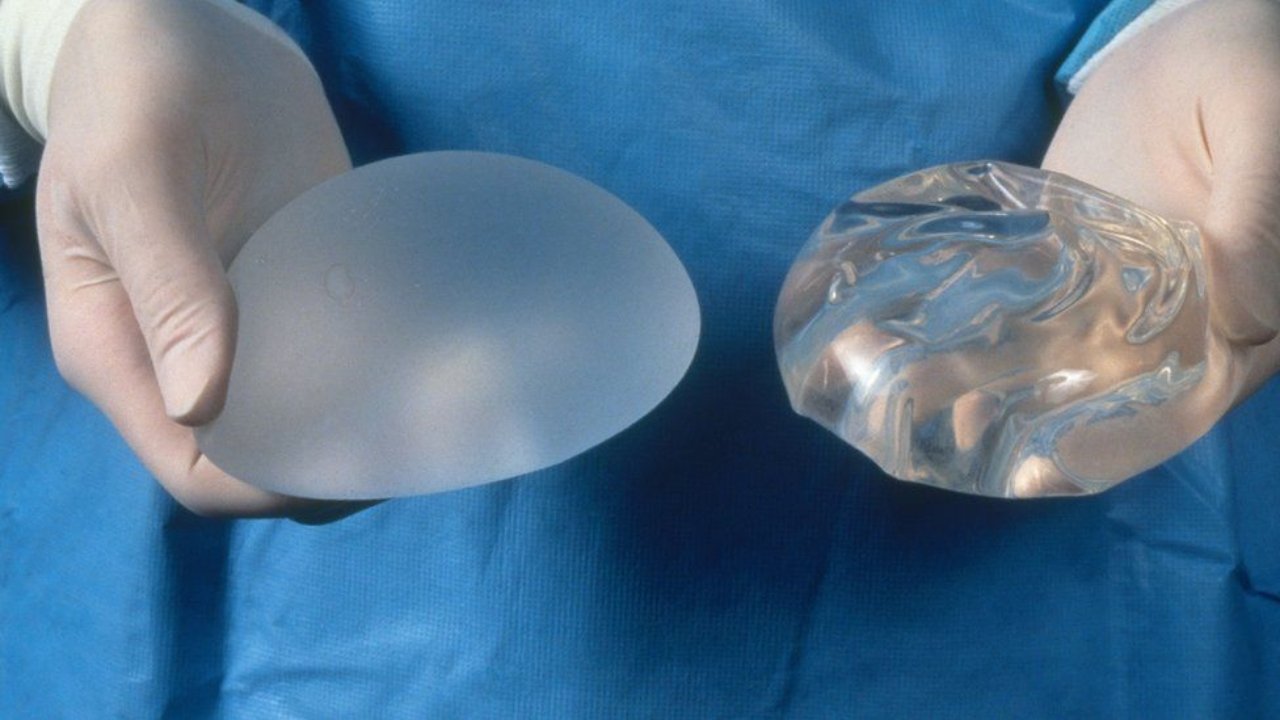
Thermal Properties
Silicone is not only resistant to high temperatures, but it also has a low coefficient of thermal expansion. In a high-temperature environment, the dimensional change is very small, and the state is very stable. Because it has a very strong chemical stability, it is not easy to oxidize and decompose at high temperatures over a long period of time. The high degree of cross-linking makes the molecular skeleton of the silicone resin very strong, and the bonding energy is extremely high. So it can keep its shape under continuous heat and pressure, and will not crack. However, it tends to become brittle at low temperatures. If under the action of external forces, it is easy to produce cracks or breakage.
Although silicone rubber is not as cross-linked as silicone, it is flexible, and at high temperatures, it is able to take advantage of its own structure to maintain its elasticity for expansion and contraction within its tolerance range without breaking all at once. It also does not become dry and brittle at low temperatures. Its greatest advantage is that it can withstand repeated alternation of hot and cold environments and maintain stable performance.
Electrical Properties
The high degree of cross-linking makes the silicone resin act like a solid wall, organizing the electric current through it, and it does not easily lose its insulating ability, even with the influence of high-temperature environments. It has a low dielectric constant and can be utilized to transmit signals without loss. It is also resistant to corona and arcing, making it ideal for use in high-voltage environments.
If silicone is like a hard wall, silicone rubber is like a soft protective cover. This is a bit of an exaggerated analogy, but it is very graphic. Like silicone, it insulates against electric currents, but unlike silicone, it can change shape and adapt flexibly to the environment. The insulation effect remains stable.
Surface Texture
Cured silicone is hard, glossy, with a dense, porous surface and a smooth feel. It is not easily scratched. Precisely because of the smooth touch, the surface has a low coefficient of friction, and the surface does not easily attract contaminants.
Silicone rubber has a soft texture, delicate touch, and a rubbery touch on the surface. It is elastic to the touch and has a little silky feeling. When the surface is pressed, it will be slightly pressurized, resulting in deformation and subsidence. Its surface has a high coefficient of friction and is not easy to slip.
Processing Method
As mentioned earlier, silicone resins and silicone gums differ mainly because of the degree of cross-linking and molecular activity, but you should never assume that they are both the same material before production. Silicone resin exists in liquid form before production. It is a long-chain linear polymer. It can be processed in a number of ways, usually by coating the liquid silicone resin and curing it with heat or catalyzing a combination of the two. After heat treatment, the silicone resin forms a hard protective layer, at which point it cannot be reworked and adjusted again, so the pre-processing requirements are very high.
Silicone rubber is either in liquid or solid form before production. It is processed in a variety of ways, including molding, injection molding, extrusion molding, and transfer molding. The shapes manufactured are complex and varied, and the dimensional accuracy is still relatively high. After molding, silicone rubber is not as hard as silicone resin, and it still maintains its elasticity. This elasticity can allow it to undergo a certain deformation, a stress range can stretch to maintain the normal use of the state, to compensate for structural changes, and there is a certain degree of tolerance.
Cost
The size of the silicone cost is determined by the formulation. This is its advantage, and the expenditure can be controlled by flexible adjustment of the formula. Moreover, the processing protocol of silicone resin is simple, does not require high requirements for automation equipment, and does not require expensive molds, so the overall production cost is lower.
The raw material cost of silicone rubber is obviously much higher than that of silicone resin. Because the use of silicone rubber for the purity of the raw material and formulation requirements are very high. The production process requires specialized molds and equipment for different processing methods. It also requires a series of inputs for quality certification. The cost is very high for small batch production, but if the mass production is on a large scale, it can greatly reduce the unit cost.
Types of Silicone Resin & Silicone Rubber
Silicone Resin
The types of silicone resins are mainly due to the different substituents in the chemical structure, which exhibit slightly different chemical properties, affecting the temperature resistance, brittleness, and processing mode of the material.
| Type | Features | Performance | Processing Method | Cost & Manufacturing Complexity |
| Methyl Silicone Resin | Short polymer chains, high cross-linking, stable structure | High heat and oxidation resistance, chemically stable; hard and brittle, not suitable for stretching or impact | Coating, impregnation, or heat curing; a simple process, no mold required | Raw material cost is moderate, formulation is flexible, and production cost is low |
| Phenyl Silicone Resin | Polymer chains contain phenyl groups, slightly more flexible | Better high-temperature stability than methyl silicone resin, better low-temperature toughness, still hard but less prone to cracking | Heat curing, similar to methyl silicone resin | Slightly higher cost than methyl silicone resin, still mainly determined by formulation, and low processing difficulty |
Silicone Rubber
Silicone rubber is classified according to the processing method and type of physical state.
| Type | Features | Performance | Processing Method | Cost & Manufacturing Complexity |
| Liquid Silicone Rubber (LSR) | Two-component liquid system, longer polymer chains, lower cross-link density | High elasticity and elongation, polymer chains are highly mobile, and can withstand repeated stretching | Injection molding: fast production cycle, suitable for automated mass production | Raw material cost is high, requires specialized injection equipment and molds; small batch cost is high, unit cost drops in large batches |
| High Consistency Rubber (HCR) | Solid or paste-like, longer polymer chains | High strength, wear-resistant, fatigue-resistant, good elasticity, can withstand large mechanical stress | Compression molding or heat press curing is a stable process | Raw material cost is high, requires molds and heating equipment; the small batch cost is high |
| Room Temperature Vulcanized (RTV) | One-component or two-component, can cure at room temperature | Good elasticity, excellent sealing, weather-resistant | On-site casting or curing, low curing temperature, flexible process | Raw material cost is moderate, easy processing, but curing time is longer and requires careful control |
Application of Silicone Resin & Silicone Rubber
Before that, you should have a general understanding of silicone resin and silicone rubber. Their roles are rigid and flexible; one is like a hard protective shell that protects and stabilizes the structure, and the other is a soft cushion that absorbs stress and provides elasticity. Once you understand their roles, you can get a general idea of where they can be used.
Silicone Resin
Protective Coatings
Silicone resin cures to form a hard protective layer that repels water, moisture, and damage caused by chemical corrosion, UV, and oxidation. It can remain stable for a long time at high temperatures. It is not easy to crack and peel off. It is suitable for use in complex environments that require long-term exposure, such as industrial exhaust systems, heat exchange equipment, automobile engine parts, and outdoor power equipment.
Electrical Insulation
Silicone resin also maintains stable insulation under high voltage environments, and is often used in transformers, motors, generators, insulating paints, and electronic packaging materials.
High Temperature Resistant Coatings and Bonding
Silicone resin is also used in complex environments with hot and cold cycles and high temperatures, using it as the core bonding material. This is because it can withstand hot and cold cycles and resist long-term heat aging. Silicone is a common material in aerospace, power systems, heavy manufacturing, and marine equipment.
Silicone Rubber
Seals & Gaskets
Silicone rubber can use its own elasticity and toughness to expand and contract thermally within tolerable limits to cope with temperature changes and maintain a seal. It is often used in automotive engines, HVAC systems, food-processing equipment, and waterproof housings.
Medical and Healthcare Products
Silicone rubber is highly biocompatible and chemically stable, hypoallergenic, and low-toxic. It is not prone to irritating reactions to the body. In the medical field, it is often used in catheters, respiratory masks, medical tubing, and wearable medical devices.
Consumer & Maternal & Child Products
In addition to the high quality of silicone products required for medical-grade devices, everyday consumer products and maternal and child products require a high level of health and hygiene from the material. Silicone rubber is soft and flexible to the touch and durable. It can be used for pacifiers, kitchenware, wearable devices, toothbrushes, and ear cleaners.
Vibration and Shock-absorbing Parts
Silicone rubber can utilize its own elasticity to absorb mechanical stress and reduce wear and tear caused by vibration. It can be used to make shock-absorbing brackets, buttons, flexible connectors, and protective sleeves. These devices are made with silicone rubber to maintain the overall equipment condition and extend service life.
Silicone Resin or Silicone Rubber: Which One Should You Choose?
There is no better choice between these two materials because each is used for different purposes. Which one to choose mainly depends on your needs and the conditions required by your application scenario. Silicone resin is suitable for places where structural support and protective coatings are needed, while silicone rubber is suitable for situations requiring dynamic vibration and deformation cushioning. Choosing the wrong type may cause the material to lose its function, and in severe cases, it can shorten the equipment’s lifespan and increase maintenance costs.
Which is better for high-temperature applications: silicone resin or silicone rubber?
Both silicone resin and silicone rubber have certain heat resistance ranges. You cannot determine which one to use solely based on high-temperature applications. It still depends on the conditions of the application scenario. If structural rigidity and coating protection are needed, choose silicone resin. If elasticity, thermal cycling, and mechanical stress absorption are required, choose silicone rubber.
Which material provides better electrical insulation?
The two are used in different applications, so it is not possible to compare which has better electrical insulation performance. Both have a silicon-oxygen main chain structure, with high bond energy and electrons that are not easily mobile. This main chain structure gives both a low dielectric constant and good dielectric strength. Both are excellent insulating materials.
For high-voltage, static, and structurally rigid applications, silicone resin is more suitable. Although silicone rubber is soft, it does not mean its insulation capability is poor. It is suitable for complex environments that require waterproofing, moisture resistance, alternating hot and cold conditions, and stress resistance. However, sometimes the two may also be used together. For example, silicone resin can be used for potting, with silicone rubber as an external protective layer.
Final Thought
The main difference between silicone resin and silicone rubber is that one is rigid while the other is flexible. Both have a silicon-oxygen structure in their molecular backbone, so they share some chemical properties. The primary reason for their differences lies in the degree of cross-linking and molecular activity. Although they have similar characteristics, the choice of application still depends on whether the specific conditions fit their properties. If you are uncertain whether to choose silicone resin or silicone rubber, you need to consider if your equipment relies more on structural stability or deformation capability.
If you are unsure, it is recommended to work with a manufacturer that is proficient in producing both materials, such as Legensilicone. Legensilicone is a source factory that can help you meet your application requirements in terms of structural strength, temperature resistance, insulation, or flexible design. They can also help you determine an engineering solution and provide professional support. If you want to learn more, you can contact us.